Four Corners Science and Computing Club
The Four Corners Science and Computing Club (4CSCC) is an innovative STEM outreach and education program developed by faculty at Northern Arizona University and Fort Lewis College, with support from the Chan Zuckerberg Initiative. The program targets middle school students in the Four Corners region of the American Southwest, with a primary focus on schools serving Native American populations across Utah, Colorado, New Mexico, and Arizona.
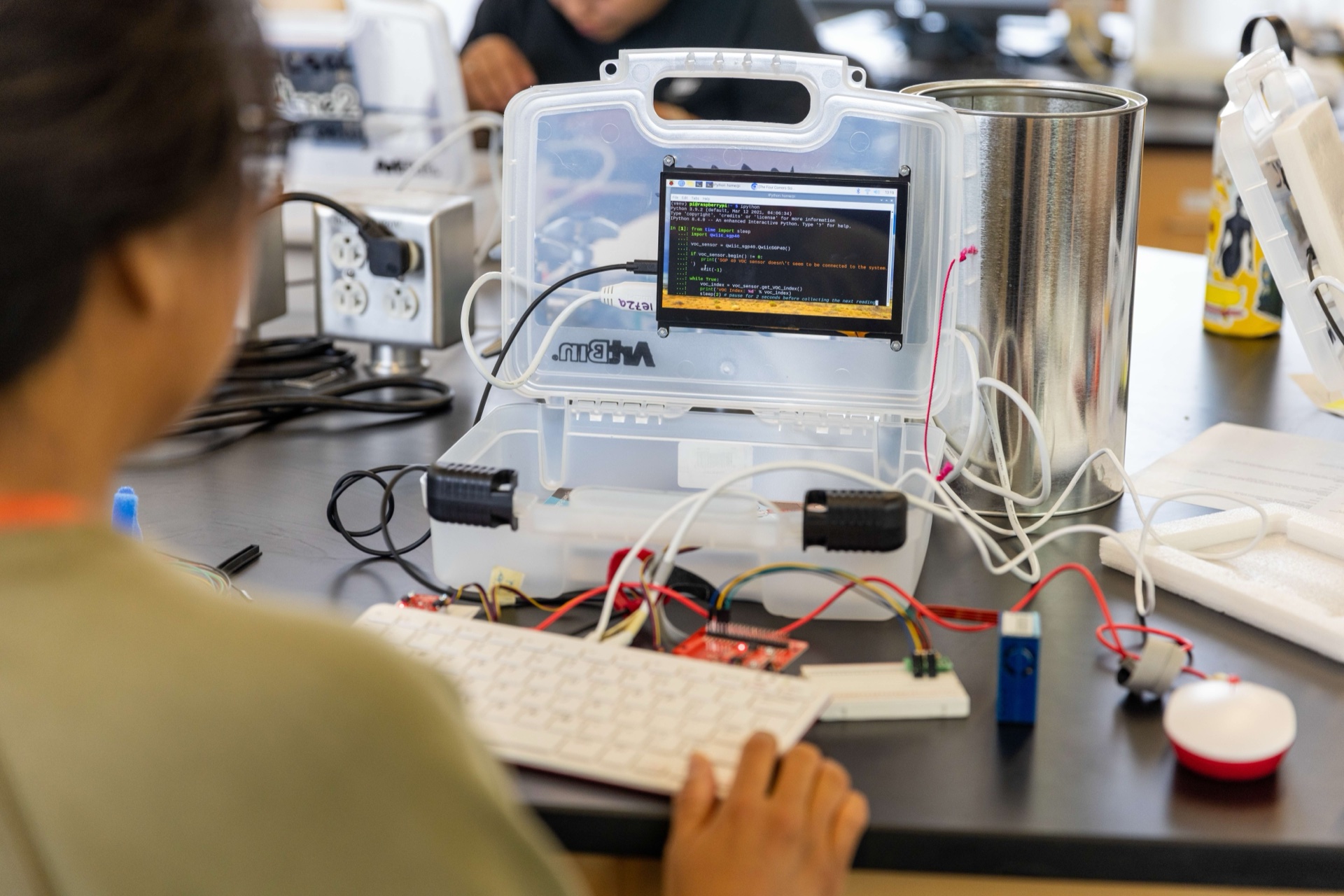
The 4CSCC curriculum integrates physical computing platforms, including the BBC Micro:bit and Raspberry Pi 400, with programming environments ranging from block-based coding in MakeCode and Scratch to text-based Python programming. Students engage in hands-on environmental science investigations, collecting and analyzing real-world data using tools that mirror those used by professional scientists. This scaffolded approach to computational thinking and data literacy is intentionally designed to meet students where they are developmentally while building the technical fluency and problem-solving skills increasingly demanded by the modern scientific workforce.
The computational and data science skills that drive fields like genomics, microbiome science, environmental monitoring, and biomedical research are the same skills students begin developing through 4CSCC activities. By introducing middle schoolers to scientific computing through culturally relevant, place-based curricula, 4CSCC is cultivating the next generation of diverse developers, data scientists, and computational biologists, with a particular commitment to increasing the representation of Native Americans in open source scientific computing, a field in which Indigenous communities remain significantly underrepresented.
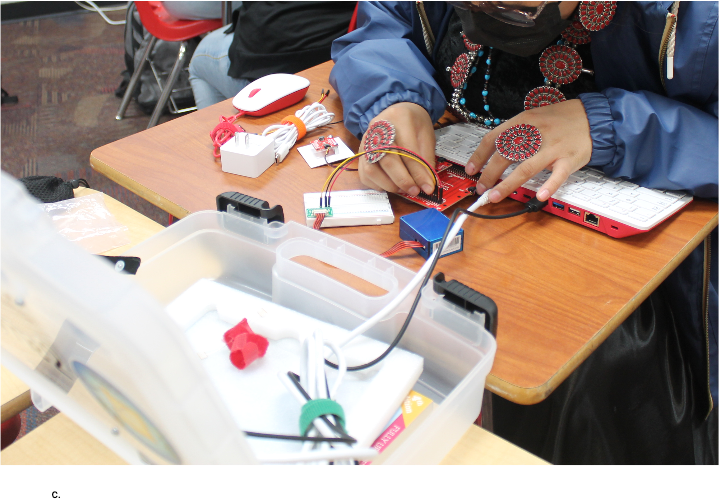
A core resource supporting this mission is our open source 4CSCC Lab Manual, which exists in two versions: a BBC Micro:bit edition and a Raspberry Pi edition. Designed as a stand-alone resource, the lab manual empowers middle school science teachers to integrate scientific computing into their classrooms without requiring prior programming expertise. The manual provides step-by-step activities that align with NGSS standards, making it an immediately practical tool for educators seeking to modernize their science instruction and introduce students to the computational tools shaping 21st century science.
Our work developing and implementing the 4CSCC curriculum has been documented in a peer-reviewed manuscript titled “Student-Designed Experiments Using Raspberry Pi and Micro:bit Environmental Sensors.” This article has been accepted for publication in Science Scope, published by Taylor & Francis and a preprint is available on EdarXiv, offering the broader science education community a look at our pedagogical approach, curriculum design, and early outcomes.
We invite middle school educators, STEM outreach professionals, and researchers interested in broadening participation in computing to explore our program, use our freely available resources, and join us in building a more inclusive scientific workforce.
Educators can access a free PowerPoint titled Scientific Computing: Increasing Classroom Engagement and Critical Thinking containing open ended activities from the The Arizona STEM Acceleration Project,” an initiative that provides direct support, resources, and funding to Arizona’s K-12 educators as they deliver high-quality, hands-on STEM education to our state’s future leaders.”